

How to Care for Your SwipeDry Twisted Loop Towel: The definitive Guide to Maintenance, Restoration & Longevity
Is your premium car drying towel starting to feel rough? Has it stopped absorbing water like it used to, leaving annoying streaks across your hood?
Don't panic—your towel isn't broken. It’s likely just clogged. And more importantly, it’s fixable.
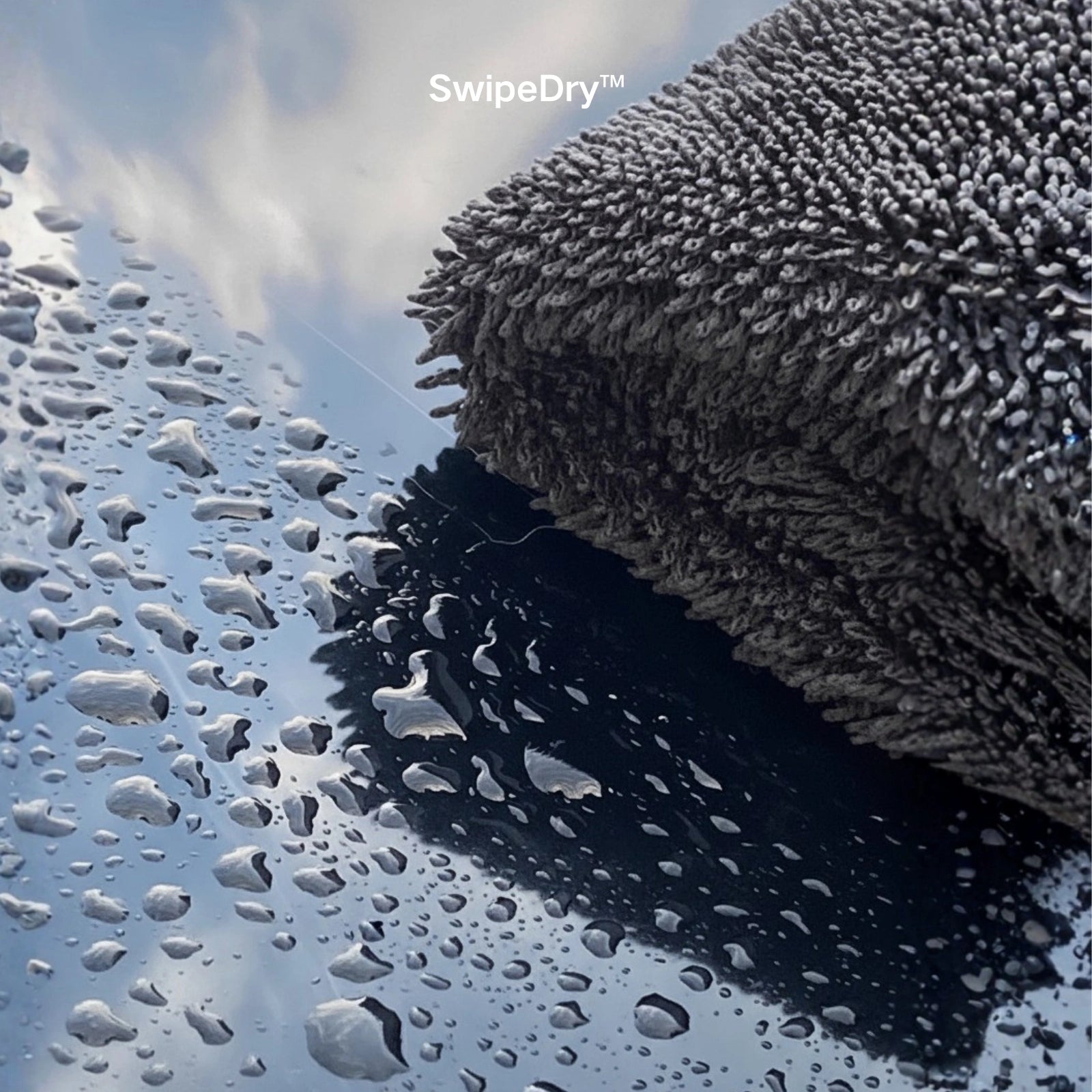
Welcome to the official SwipeDry Care & Usage Guide SwipeDry™ Twisted Loop Microfiber Drying Kit, widely considered the pinnacle of modern car drying technology. Unlike the cheap, fluffy "throwaway" towels you might find at a bargain store, your SwipeDry towel is a precision-engineered tool. It features a unique, dense "twisted loop" weave designed to drink up gallons of water instantly and glide safely over delicate clear coats.
However, high-performance tools require specific maintenance protocols. If you treat this towel like an old gym shirt, you will destroy its performance in a single wash cycle. Treat it right, and it will last for 500+ washes, keeping your car swirl-free for years.
In this deep-dive guide, we will go beyond the basics. We will explore the microscopic science of microfiber, the detailed chemistry of detergents, How to wash car microfiber towels the right way, and the pro-secrets to restoring "dead" towels that refuse to absorb water.
The Microscopic Science (Why Care is Critical)
To understand why you cannot simply toss your drying towel in with your cotton socks, you need to understand what makes it work in the first place.
The Anatomy of a SwipeDry Towel
Microfiber is a synthetic blend, typically consisting of Polyester (the structure/scrubbing power) and Polyamide (the absorbent core). During manufacturing, these fibers are "split" to be microscopic—100 times thinner than a human hair.
This split structure creates millions of tiny "hooks" and "channels" (capillaries).
- Cotton fibers are round and smooth; they push water around.
- Microfiber traps dirt, dust, and water inside these microscopic channels.
The "Clog" Phenomenon
Because microfiber is engineered to grab and hold everything it touches, it is incredibly susceptible to clogging. It traps:
- Minerals: From hard water in your washing machine.
- Chemicals: Residual detergents, fabric softeners, and drying aids.
- Waxes/Sealants: The very products you use to protect your car paint can coat the fibers of your towel, making it hydrophobic (water-repellent).
When these channels are clogged ("impregnated"), capillary action stops. Your towel becomes a waterproof sheet. The goal of washing isn't just to "clean" the towel; it is to chemically strip these contaminants from the fiber channels without damaging the delicate splits.
The Golden Rules of Separation
Successful detailing laundry starts before you even touch the washing machine. Cross-contamination is the number one killer of paint-safe towels.
The 3-Bucket Laundry System
Never mix towels used for different tasks. Brake dust is sharp and metallic. If a wheel towel is washed with your drying towel, microscopic metal shards can migrate onto your drying towel. The next time you dry your hood, you will be sanding your paint.
Sort your laundry into these three strict piles:
- Category A: The "Paint-Safe" Pile (Highest Priority)Includes: SwipeDry Drying Towels, plush buffing towels, and glass towels.Contamination Level: Low (mostly water and light dust).Rule: Wash these ALONE. They are the VIPs.
- Category B: The "Chemical" PileIncludes: Towels used for removing ceramic coatings, waxes, sealants, or interior dressings.Contamination Level: Medium (oils and polymers).Rule: These need a stronger detergent ratio or a pre-soak to break down the waxes.
- Category C: The "Dirty Job" PileIncludes: Wheel towels, engine bay rags, door jamb towels, and exhaust tip towels. Contamination Level: High (grease, brake dust, heavy grime). Rule: Wash these last, or ideally, in a separate machine cycle entirely.
The Cotton Ban: Never, under any circumstances, wash microfiber with cotton items (clothes, bath towels). Cotton sheds lint. Microfiber grabs lint. Once a microfiber towel is "linted," it is nearly impossible to fix.
Detergent Chemistry (What to Use & Avoid)
This is where 90% of car enthusiasts go wrong. The detergent you use for your jeans is likely damaging your detailing towels.
What to Use
- Dedicated Microfiber Detergent (Best Choice): Products like Rags to Riches, Micro-Restore, or Chemical Guys Microfiber Wash are formulated specifically to break down polymer waxes and silicones. They rinse out 100% clean.
- Free & Clear Liquid Detergent (Good Alternative): If you don't have specialized wash, use a standard liquid detergent that is labeled "Free & Clear" (No Scent, No Dye). Brands like Tide Free & Gentle or All Free Clear work well.
What to AVOID (The "Towel Killers")
- ❌ Powdered Detergents: These often contain undissolved crystals that can lodge in the fibers and scratch your paint later.
- ❌ Detergent Pods (Pacs): These are convenient for clothes but terrible for microfiber. The outer casing is a polymer that can clog fibers, and many pods contain hidden softeners or "brighteners."
- ❌ Optical Brighteners: Common in laundry detergents to make whites look "whiter." These are chemical dyes that clog the absorbent pores of the fiber.
- ❌ Bleach: Bleach degrades the polyamide fibers, making the towel brittle and scratchy over time.
The Washing Process (Step-by-Step)
Follow this definitive process for cleaning your SwipeDry Twisted Loop Towel.
Step 1: The Pre-Soak (Optional but Recommended)
If your towel is heavily soiled or has accidentally picked up some wax, soak it in a bucket of warm water mixed with an ounce of microfiber detergent for 2-3 hours before washing. This helps loosen the contaminants.
Step 2: Machine Settings
- Temperature: Cool or Warm water only (Max 104°F / 40°C).Warning: Microfiber is plastic. Excessive heat (Hot setting) can melt the fibers. Once melted, they become hard plastic barbs.
- Cycle: "Gentle," "Delicate," or "Synthetics." High-speed spin cycles can sometimes distort the twisted loop weave.
- Extra Rinse: Always select the "Extra Rinse" option. You need to ensure every trace of soap is flushed out. Soap residue attracts dirt and causes streaks.
Step 3: The "Vinegar Trick" (Secret Weapon)
In the rinse cycle (or the fabric softener compartment), add 1/2 cup of distilled white vinegar.
- Why? Vinegar is a natural acid (Acetic Acid). It neutralizes alkaline detergent residues and dissolves mineral buildup (limescale) from hard water.
- Result: It leaves the fibers soft, open, and incredibly absorbent without using any waxy softeners.
Drying Your Towels (Heat is the Enemy)
You have washed them correctly. Now, don't ruin them in the dryer.
Method A: Air Dry (The Gold Standard)
For the absolute maximum lifespan of your SwipeDry Kit, air drying is superior.
- Hang the towels on a drying rack indoors.
- Avoid drying outdoors if it's windy, as wet microfiber acts like a magnet for pollen, dirt, and leaves floating in the air.
- Twisted loop towels are breathable and dry relatively quickly.
Method B: Machine Dry (The Convenient Way)
You can use a dryer, but you must follow one rule: LOW HEAT or NO HEAT.
- Set dryer to "Air Fluff" or "Low Heat."
- Do not over-dry. Microfiber dries 50% faster than cotton. 15-20 minutes is often enough.
- Static Warning: Over-drying creates massive static electricity. If your towel comes out crackling with static, it will attract dust the second you walk into the garage. Remove them while they are ever-so-slightly damp.
How to Use Your SwipeDry Towel Properly
The technique matters as much as the tool. Using a drying towel incorrectly can still induce swirl marks, even if the towel is clean.
1. The "Drag" Method (For Horizontal Surfaces)
This is the safest way to dry hoods, roofs, and trunks.
- Lay Flat: Unfold the large SwipeDry towel and cast it flat over the wet panel.
- Pat: Gently pat the top to engage absorption.
- Pull: Grab two corners and slowly pull the towel across the surface towards you.
- No Pressure: Let the weight of the water-logged towel do the work. Do not press down. Friction causes scratches; the towel's job is to lift water, not scrub the paint.
2. The "Blot" Method (For Maximum Safety)
For extremely soft or delicate paints (like Jet Black):
- Lay the towel flat.
- Pat it gently with your hand to absorb water.
- Lift it straight up and move to the next spot. Do not drag it at all.
3. Lubrication is Key
Even the best towel creates some friction. To make drying safer, spray a Drying Aid (a dedicated spray wax or quick detailer) on the wet car before drying. This adds a layer of lubrication, helps break surface tension, and adds shine while you dry.
Troubleshooting & Restoration Guide
Even with good care, towels can degrade over time. Here is how to save them.
Problem: "My towel is pushing water instead of absorbing it."
Diagnosis: The fibers are clogged with wax, softener, or detergent residue.
The Fix: The Boiling Method.
(Note: Only do this as a last resort for standard microfiber, proceed with caution for twisted loop).
- Boil a pot of water.
- Remove from heat.
- Add a splash of vinegar.
- Submerge the towel for 10-15 minutes. The heat helps melt waxy buildup, and the vinegar dissolves it.
- Wash immediately as normal (No detergent).
Problem: "My towel feels crunchy/hard."
Diagnosis: Hard water mineral buildup or melted fibers from high heat drying.
The Fix:
- If it's mineral buildup: Soak in a bucket of water with 1 cup of vinegar for an hour, then wash.
- If it's melted fibers (plastic feel): It is dead. You cannot unmelt plastic. Downgrade this towel to "Category C" (wheels/engine) and buy a new SwipeDry kit for your paint.
Problem: "I see lint on my car."
Diagnosis:
- New Towel Lint: Some production lint is normal. Wash the towel once before first use.
- Cotton Contamination: You washed it with a bath towel.
The Fix: Use a lint roller on the dry towel to remove loose fibers. Wash again alone. If lint persists, the towel may be damaged.
Frequently Asked Questions (FAQ)
Can I iron my drying towel to make it flat?
Absolutely not. Ironing will instantly melt the polyester fibers, ruining the towel permanently.
Does the color of the towel matter for washing?
Sometimes. Darker colored towels (red/black/blue) may bleed dye during the first wash. We recommend washing dark towels separately from light towels (yellow/white) for the first cycle to avoid color transfer.
What is "Twisted Loop" and why is it harder to care for?
Twisted loop is a premium weave where fibers are bundled into loops. While more absorbent, these loops can "snag" on sharp emblems or trim pieces. Always inspect your car for sharp edges (like badging letters) and dab those areas gently rather than dragging the towel over them, which could pull a thread.
How do I store my towels?
Store them in a sealed plastic bin or a closed cabinet. Do not leave them exposed on a shelf in the garage. Garages are dusty environments; an exposed towel will act like a dust filter, filling up with grit that will scratch your car next time you use it.
The SwipeDry Promise
Your SwipeDry Twisted Loop Drying Kit is built to professional standards. We have engineered it to hold massive amounts of water and protect your paint. By following this care guide, you are protecting your investment and ensuring that every time you dry your car, it looks like it just rolled out of the showroom.
Need more detailing tips? Check out our blog Auto Care for more guides on achieving the perfect finish.